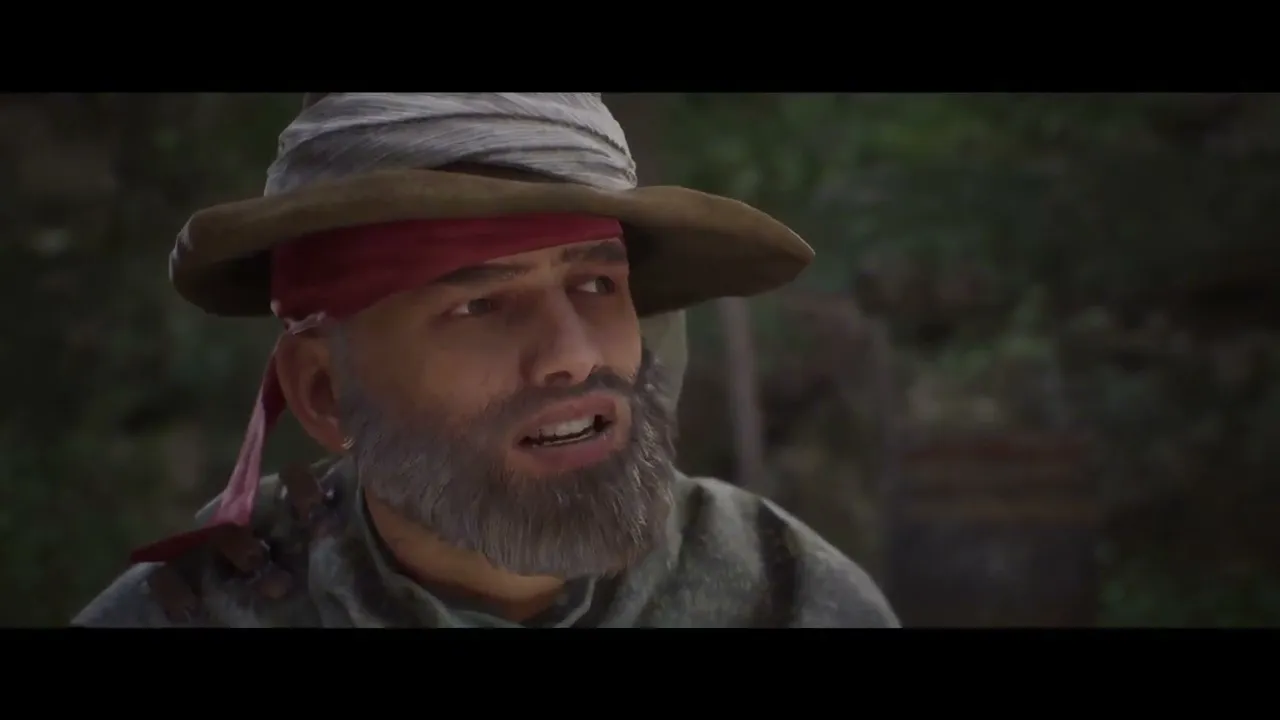
Sedleo - 1348 Ex Voto
Sedleo - 1348 Ex Voto
Other Projects
Videogame Breakdown
Project Type: Action/Adventure Video Game
Tools Used: Unreal 5
Role: Narrative Designer / Writer
Development Time: [4 years]
Concept Overview
1348 Ex Voto is an action/adventure video game with a strong narrative focus that depicts a young knight's journey through the deconstruction of his illusions and towards the discovery of a new worldview. Facing the key aspects of chivalry, taken to extreme and corrupt consequences, the protagonist must find his own path towards a more concrete and personal moral solution.
Core Narrative Pillars
Naivety and reality: The journey is a path of evolution towards awareness of the truth.
Meaningful Moral Choices: Every encounter is a moral issue that must be addressed. Every battle is a path toward the protagonist's evolution.
Identity & Transformation: At the end of the journey, the protagonist will have completed his evolution and will be ready to face the most difficult moral choice.
Gameplay-Narrative Integration
Linear structure with strong cinematic flair
Profound and thoughtful dialogues with strong philosophical and moral connotations
Each act represents a new piece that will make up the final form of the character
My Role
Built the full narrative structure
Drafting of the script
Conduct in-depth research on historical background
Defined tone, themes, and emotional trajectory
Collaborate with Level Designers and Environment Artists in level development
Designing in-game barks and dialogue lines
Conducted internal playtesting and flow revisions
Development of descriptions and in-game texts
Implementation of narration on Unreal
Videogame Breakdown
Project Type: Action/Adventure Video Game
Tools Used: Unreal 5
Role: Narrative Designer / Writer
Development Time: [4 years]
Concept Overview
1348 Ex Voto is an action/adventure video game with a strong narrative focus that depicts a young knight's journey through the deconstruction of his illusions and towards the discovery of a new worldview. Facing the key aspects of chivalry, taken to extreme and corrupt consequences, the protagonist must find his own path towards a more concrete and personal moral solution.
Core Narrative Pillars
Naivety and reality: The journey is a path of evolution towards awareness of the truth.
Meaningful Moral Choices: Every encounter is a moral issue that must be addressed. Every battle is a path toward the protagonist's evolution.
Identity & Transformation: At the end of the journey, the protagonist will have completed his evolution and will be ready to face the most difficult moral choice.
Gameplay-Narrative Integration
Linear structure with strong cinematic flair
Profound and thoughtful dialogues with strong philosophical and moral connotations
Each act represents a new piece that will make up the final form of the character
My Role
Built the full narrative structure
Drafting of the script
Conduct in-depth research on historical background
Defined tone, themes, and emotional trajectory
Collaborate with Level Designers and Environment Artists in level development
Designing in-game barks and dialogue lines
Conducted internal playtesting and flow revisions
Development of descriptions and in-game texts
Implementation of narration on Unreal
CUTSCENE #05 - LEADER
For a place supposedly crawling with Bandits, the area is suspiciously quiet. She slowly walks through a corridor of tents. The open tents are filled with the Bandits' ill-gotten gains, from supplies to weapons to treasure. However, there are also signs of mundane, civilian life strewn around: tables set up for games of cards, women's clothing hung on washing lines, pots of stew boiling over fireplaces, etc. The space is littered with everyday items like tools and clothing, showing that people have been living here for several months. Among them are nonviolent items that clearly do not belong to combatants: walking sticks, children's toys, threadbare blankets, etc.
The BRIGANTE waits for Aeta in the middle of the clearing. He sits on a tree stump, his hands empty and weapon laid on the ground. Unlike the other Brigands Aeta has encountered, he does not look hungry for a fight. He gives Aeta a wry, tired, grin.
BRIGANTE
So, you’re the young knight who’s brought chaos to this camp? I beg a moment to talk. Do you grant it?
Aeta does not put her sword down. Instead, she angles it toward him.
AETA
Speak then! But know that the words of a murderer and a thief hold little weight with me.
BRIGANTE
You’re quick and free with that blade. This camp harbours all kinds. We’re not criminals.
AETA
You murder! You kidnap!
(beat)
I take no pleasure in bloodshed, yet your actions demand it! I have sworn an oath of justice.
BRIGANTE
An oath? To who exactly? To God? Our Lady Mary? No, that was not your meaning…
(beat)
Not to that craven who calls himself the lord of these lands?
Aeta is surprised that the Bandit knows exactly who sent her. She lowers the blade a bit, and the Brigante takes this as a sign to keep talking. He scoffs.
BRIGANTE (cont’d)
[laughs] He must have rejoiced to find someone so earnest.
(beat)
We toiled for him. Filled his silos with grain, his coffers with coin, and for what? When the pestilence came, he turned his back on us all, locked his gates and told us to face our judgement. He left us nothing.
The Brigante stands up, picking up his weapon as he does. He shows it to Aeta. The blade is not a sword or other fancy weapon specially crafted for a noble. It is crude and dangerous, a farming tool - a huge axe, that has been modified for violence. He frowns, thinking of the difficult and frustrating choices he has had to make.
BRIGANTE (cont’d)
We did what we must.
AETA
Turning on others?! Raiding? Plundering?
BRIGANTE
What would you know about the cost of surviving?! Do you know how hard it is to feed a family, little-lord?
(beat)
Do you believe I enjoyed doing the things I’ve done?
Aeta wavers a bit, considering what the Brigante said, but she decides to stick to her nobles' morals. She raises her sword again.
AETA
Yet you did them still.
CUTSCENE #05 - LEADER
For a place supposedly crawling with Bandits, the area is suspiciously quiet. She slowly walks through a corridor of tents. The open tents are filled with the Bandits' ill-gotten gains, from supplies to weapons to treasure. However, there are also signs of mundane, civilian life strewn around: tables set up for games of cards, women's clothing hung on washing lines, pots of stew boiling over fireplaces, etc. The space is littered with everyday items like tools and clothing, showing that people have been living here for several months. Among them are nonviolent items that clearly do not belong to combatants: walking sticks, children's toys, threadbare blankets, etc.
The BRIGANTE waits for Aeta in the middle of the clearing. He sits on a tree stump, his hands empty and weapon laid on the ground. Unlike the other Brigands Aeta has encountered, he does not look hungry for a fight. He gives Aeta a wry, tired, grin.
BRIGANTE
So, you’re the young knight who’s brought chaos to this camp? I beg a moment to talk. Do you grant it?
Aeta does not put her sword down. Instead, she angles it toward him.
AETA
Speak then! But know that the words of a murderer and a thief hold little weight with me.
BRIGANTE
You’re quick and free with that blade. This camp harbours all kinds. We’re not criminals.
AETA
You murder! You kidnap!
(beat)
I take no pleasure in bloodshed, yet your actions demand it! I have sworn an oath of justice.
BRIGANTE
An oath? To who exactly? To God? Our Lady Mary? No, that was not your meaning…
(beat)
Not to that craven who calls himself the lord of these lands?
Aeta is surprised that the Bandit knows exactly who sent her. She lowers the blade a bit, and the Brigante takes this as a sign to keep talking. He scoffs.
BRIGANTE (cont’d)
[laughs] He must have rejoiced to find someone so earnest.
(beat)
We toiled for him. Filled his silos with grain, his coffers with coin, and for what? When the pestilence came, he turned his back on us all, locked his gates and told us to face our judgement. He left us nothing.
The Brigante stands up, picking up his weapon as he does. He shows it to Aeta. The blade is not a sword or other fancy weapon specially crafted for a noble. It is crude and dangerous, a farming tool - a huge axe, that has been modified for violence. He frowns, thinking of the difficult and frustrating choices he has had to make.
BRIGANTE (cont’d)
We did what we must.
AETA
Turning on others?! Raiding? Plundering?
BRIGANTE
What would you know about the cost of surviving?! Do you know how hard it is to feed a family, little-lord?
(beat)
Do you believe I enjoyed doing the things I’ve done?
Aeta wavers a bit, considering what the Brigante said, but she decides to stick to her nobles' morals. She raises her sword again.
AETA
Yet you did them still.
Read the Entire Script!
Kintsugi - Hero Arises
Video Game Breakdown
Project Type: Interactive Narrative Prototype
Tools Used: Arcweave
Role: Narrative Designer / Writer
Development Time: [Game Jam of 3 days]
Concept Overview
Kintsugi – Hero Arises is a narrative prototype built around the idea that personal fractures are not weaknesses to hide, but marks of growth. The player follows a protagonist forced to confront their inner cracks, transforming them into the very source of their emerging heroism.
Core Narrative Pillars
Fragility as Strength: Emotional fractures open new narrative paths.
Meaningful Moral Choices: Each decision reflects an internal conflict.
Identity & Transformation: The hero evolves based on player-driven choices.
Story Structure
Beginning - Field of Lethe: Introduction of the protagonist and hub of the game.
Mausoleum of Regret: Remorse is like a prison that prevents us from looking to the future. To be able to get back up, we must be able to accept the past and not lose ourselves in what might have been.
Mausoleum of Fear: Fear is like a chain that holds us down and prevents us from rising up. It is not necessarily a negative force, if we can use it and learn from it.
Mausoleum of Shame: Shame as a force that prevents us from moving forward. Defeat is part of the journey. We must not fear it, but embrace it as a necessary step.
Endings: The hero chooses his own path. Even at the end, he always has the option of choosing a well-deserved peace. Facing a future fraught with responsibility and possible suffering must be an act of free will, not an imposition.
Gameplay-Narrative Integration
Branching structure built entirely in Arcweave
Multiline dialogue with emotional-state variations
Nodes reflect the protagonist’s psychological evolution
My Role
Built the full narrative structure
Wrote branching dialogue and scene variations
Defined tone, themes, and emotional trajectory
Developing gameplay mechanics
Implemented the prototype in Arcweave
Conducted internal playtesting and flow revisions
Project Goal
Showcase the ability to:
Build coherent branching narrative systems
Maintain thematic consistency
Write dynamic, reactive dialogue
Translate abstract concepts (e.g., Kintsugi) into interactive storytelling
Expressing the concept of resilience in a coherent and profound story
Game Boards
Project Type: Interactive Narrative Prototype
Tools Used: Arcweave
Role: Narrative Designer / Writer
Development Time: [Game Jam of 3 days]
Concept Overview
Kintsugi – Hero Arises is a narrative prototype built around the idea that personal fractures are not weaknesses to hide, but marks of growth. The player follows a protagonist forced to confront their inner cracks, transforming them into the very source of their emerging heroism.
Core Narrative Pillars
Fragility as Strength: Emotional fractures open new narrative paths.
Meaningful Moral Choices: Each decision reflects an internal conflict.
Identity & Transformation: The hero evolves based on player-driven choices.
Story Structure
Beginning - Field of Lethe: Introduction of the protagonist and hub of the game.
Mausoleum of Regret: Remorse is like a prison that prevents us from looking to the future. To be able to get back up, we must be able to accept the past and not lose ourselves in what might have been.
Mausoleum of Fear: Fear is like a chain that holds us down and prevents us from rising up. It is not necessarily a negative force, if we can use it and learn from it.
Mausoleum of Shame: Shame as a force that prevents us from moving forward. Defeat is part of the journey. We must not fear it, but embrace it as a necessary step.
Endings: The hero chooses his own path. Even at the end, he always has the option of choosing a well-deserved peace. Facing a future fraught with responsibility and possible suffering must be an act of free will, not an imposition.
Gameplay-Narrative Integration
Branching structure built entirely in Arcweave
Multiline dialogue with emotional-state variations
Nodes reflect the protagonist’s psychological evolution
My Role
Built the full narrative structure
Wrote branching dialogue and scene variations
Defined tone, themes, and emotional trajectory
Developing gameplay mechanics
Implemented the prototype in Arcweave
Conducted internal playtesting and flow revisions
Project Goal
Showcase the ability to:
Build coherent branching narrative systems
Maintain thematic consistency
Write dynamic, reactive dialogue
Translate abstract concepts (e.g., Kintsugi) into interactive storytelling
Expressing the concept of resilience in a coherent and profound story
Video Game Breakdown
Project Type: Interactive Narrative Prototype
Tools Used: Arcweave
Role: Narrative Designer / Writer
Development Time: [Game Jam of 3 days]
Concept Overview
Kintsugi – Hero Arises is a narrative prototype built around the idea that personal fractures are not weaknesses to hide, but marks of growth. The player follows a protagonist forced to confront their inner cracks, transforming them into the very source of their emerging heroism.
Core Narrative Pillars
Fragility as Strength: Emotional fractures open new narrative paths.
Meaningful Moral Choices: Each decision reflects an internal conflict.
Identity & Transformation: The hero evolves based on player-driven choices.
Story Structure
Beginning - Field of Lethe: Introduction of the protagonist and hub of the game.
Mausoleum of Regret: Remorse is like a prison that prevents us from looking to the future. To be able to get back up, we must be able to accept the past and not lose ourselves in what might have been.
Mausoleum of Fear: Fear is like a chain that holds us down and prevents us from rising up. It is not necessarily a negative force, if we can use it and learn from it.
Mausoleum of Shame: Shame as a force that prevents us from moving forward. Defeat is part of the journey. We must not fear it, but embrace it as a necessary step.
Endings: The hero chooses his own path. Even at the end, he always has the option of choosing a well-deserved peace. Facing a future fraught with responsibility and possible suffering must be an act of free will, not an imposition.
Gameplay-Narrative Integration
Branching structure built entirely in Arcweave
Multiline dialogue with emotional-state variations
Nodes reflect the protagonist’s psychological evolution
My Role
Built the full narrative structure
Wrote branching dialogue and scene variations
Defined tone, themes, and emotional trajectory
Developing gameplay mechanics
Implemented the prototype in Arcweave
Conducted internal playtesting and flow revisions
Project Goal
Showcase the ability to:
Build coherent branching narrative systems
Maintain thematic consistency
Write dynamic, reactive dialogue
Translate abstract concepts (e.g., Kintsugi) into interactive storytelling
Expressing the concept of resilience in a coherent and profound story
Kintsugi - Hero Arises